|
|
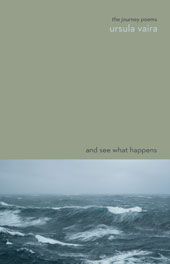
And See What Happens: the journey poems by Ursula Vaira "John Berger writes that
poetry is closer to prayer than it is to prose.
The book consists of three long poems from transformative journeys in BC's wilderness. "And See What Happens" is from
a thirty-day thousand-mile paddle from Hazelton on the Skeena River
to Victoria on Vancouver Island, with skipper Roy Henry Vickers
in the Coast Salish canoe Nunsulsailus (Many Hands). The journey
mixed RCMP and First Nations pullers to try to build community between
the two groups, acutely aware that if they didn't learn to pull
together under very difficult conditions, the journey would end
in disaster.
"Frog River" is the story of a woman's stay in an isolated hunter's cabin in the northern Rockies. She is not sure whether she has left her lover or just left him behind; whether love is more dangerous than anything she might encounter in the wilderness. She has plenty of time to ponder these questions on this adventure which culminates in a hike to the Great Divide. The poem is written in couplets which leap from one image to another—like the poet crossing the creek on stones, never sure whether the next step will result in an icy dunking. There is humour—in one scene the poet sits in the outhouse, knowing a grizzly could wander by at any time, and wonders whether it is better to have left the door open or closed. A perfect metaphor for how we choose to look at or to duck from life's little problems, no? "Last One to Get There," is from a twenty-two-day kayaking and wilderness camping trip which rounded both the dreaded capes Scott and Cook on Vancouver Island. This is a poem of place, of landscape, of west-coast image, with each stanza named for its landing spot. It is also my attempt to invent a new form for the paddling poem, very different from the regular cadence of the sea shanty or the paddling song, which borrow rhythm from the way the body moves the boat through the water. This rhythm comes from the way the sea moves the boat, urging it along, pulling it back and surging it forward again. The same rhythm the body feels, lying near sleep at night after a day's paddle. |